
What Is an Integrated Rigid Box Making and Lining Production Line?
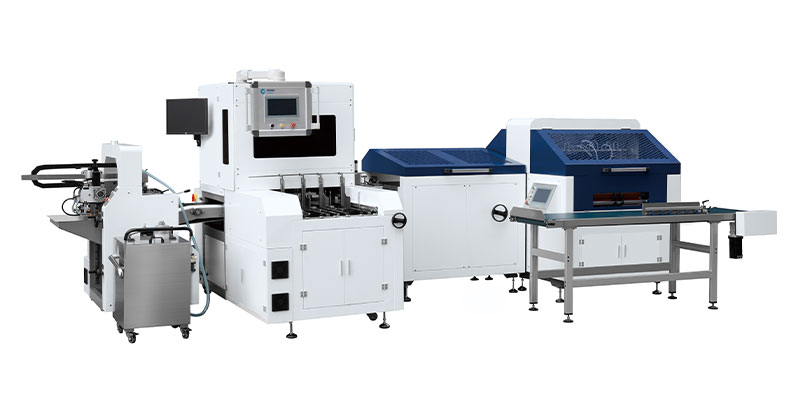
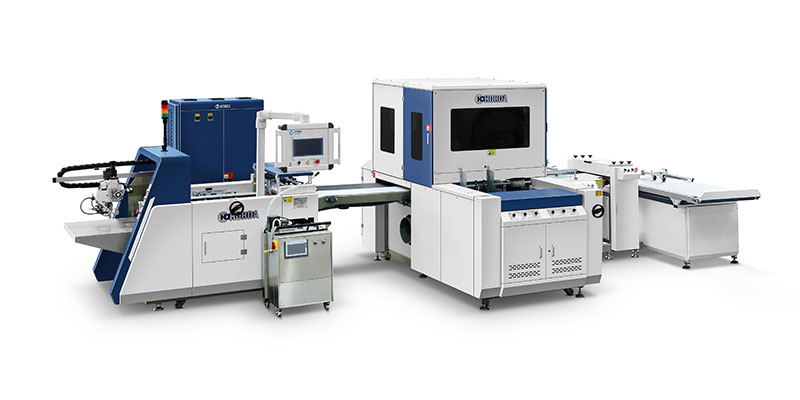
An integrated rigid box making and lining line connects outer case wrapping with inner paper lining to produce a wrapped, internally lined case.
Case making positions the grayboard on the cover paper and folds the paper over its edges. Inner lining covers the specified inside surface. Connecting these stages allows the case to move directly from wrapping to lining.
How Does an Integrated Case Making and Lining Line Work?
The line links the following operations in a continuous workflow:
- Cover paper feeding and gluing: The machine feeds the outer covering material and applies adhesive.
- Grayboard positioning: Boards are placed on the cover paper according to the required panel layout.
- Edge folding: The paper edges are folded over the boards to complete the outer wrap.
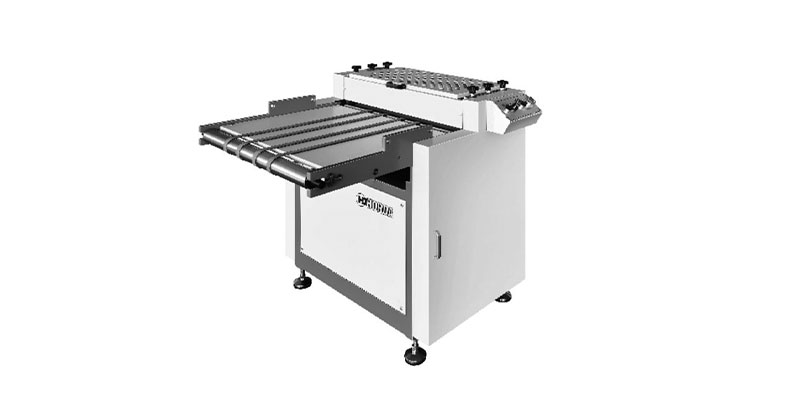
- Case transfer: A connected transfer mechanism moves the wrapped case to the lining stage.
- Inner paper lining: The lining paper is positioned and bonded to the designated inside surface.
The output is a lined case component. Additional operations depend on the finished packaging design.
What Is the Difference Between Case Making and Inner Lining?
- Case making creates the wrapped outer structure by combining cover paper with positioned grayboard panels.
- Inner lining applies paper to the inside face, covering the specified area and providing the required internal finish.
A standalone case maker may complete the outer wrap without applying inner paper. When comparing equipment, confirm whether lining is included in the supplied configuration.
Inner lining is not final box assembly. It does not automatically include attaching a tray, fitting a foam insert, installing magnets or assembling the complete box.
What Are the Benefits of an Integrated Production Line?
The main benefit is fewer handling steps between case making and lining. With separate machines, operators may need to stack, move and reload cases. A connected line transfers them directly, reducing intermediate handling and helping keep the two stages coordinated.
Actual labor requirements and output depend on material loading, job changes, inspection and the rest of the production process. Assess these using your own products rather than assuming a fixed saving.
Which HORDA Machines Combine Case Making and Lining?
HORDA’s QZFM-700A and QZFM-1000A configurations combine case making, case transfer and inner paper lining. They are part of the HORDA rigid box making machine range, with different working size limits for each model.
Compare the open case dimensions, board layout and lining requirements against the selected model. The finished box dimensions alone do not establish whether its unfolded case can pass through both stages.
Should You Choose Separate Machines or an Integrated Line?
An integrated line is worth considering when the same jobs regularly need both case making and lining, especially if transfer and reloading interrupt production. Separate machines may offer more scheduling flexibility when cases follow different finishing routes or lining is only needed for some orders.
- Product compatibility: Check that both stages support the case dimensions, board thickness and covering materials.
- Balanced output: Compare sustained case-making output with the lining stage’s ability to process the same job.
- Changeovers: Check the adjustments required at both stages when changing size or panel layout.
- Factory layout: Allow room for the transfer mechanism, material loading, inspection and maintenance access.
Run a sample from cover paper feeding through to the lined case. Inspect outer wrapping, inner paper alignment and bonding after the adhesive has set. This checks the complete workflow rather than either machine in isolation.