
How to Process Thick Greyboard on a Rigid Box Making Machine
Process thick greyboard by checking the machine’s thickness and size limits, adjusting positioning and folding, and testing the actual board and cover paper.
How Do You Check Greyboard Thickness Before Production?
Measure the actual board thickness at several points across the sheets and compare it with the job specification. Boards sold at the same nominal thickness can vary, so also check flatness, clean edges and consistent dimensions before loading them.
Thicker board does not automatically produce a stronger box. Board grade, stiffness, panel size and the finished structure also affect performance.
What Is the Maximum Greyboard Thickness a Rigid Box Machine Can Handle?
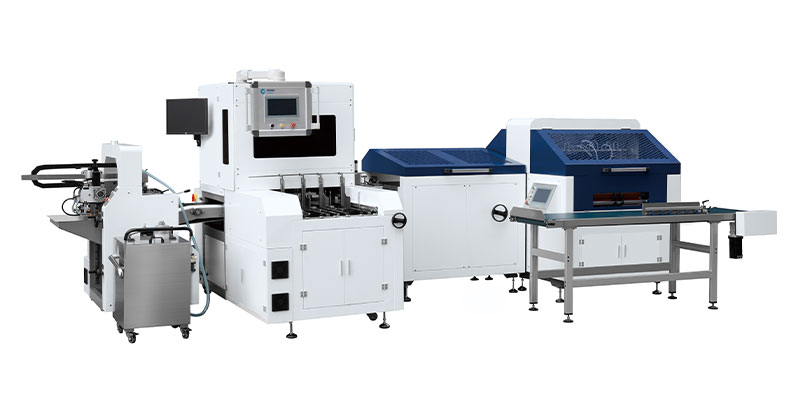
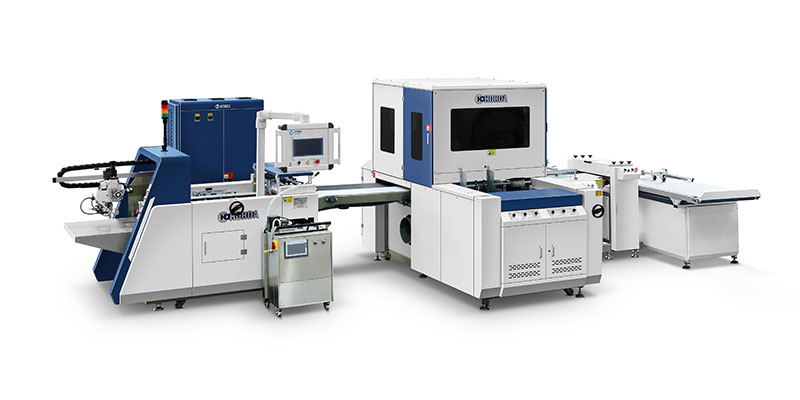
The limit depends on the model. HORDA lists a board thickness range of 1.0–3.0 mm for the ZFM-700H and 1.0–4.0 mm for the ZFM-1000H. The 4.0 mm capability should not be applied to the whole range.
When comparing HORDA rigid box making machines, check thickness together with open case dimensions, individual panel widths and the required edge finish. A thickness rating alone does not confirm that a particular board layout can be processed.
Why Does Thick Greyboard Need Accurate Positioning?
The boards must sit in the correct positions on the cover paper so that each edge has enough material for wrapping. A misplaced board can leave one edge short of paper and too much material on the opposite side.
For cases with several panels, check the gaps against the product drawing and test how the case opens and closes. Changing board thickness can require a revised layout to maintain the intended movement and finished dimensions.
How Does Board Thickness Affect Edge Wrapping?
Cover paper must travel around the board edge before folding onto the inside face. A thicker board uses more paper around that edge, so the blank size and corner trim may need adjustment. Reusing the blank from a thinner-board job can leave insufficient coverage.
- Paper allowance: Confirm that enough material remains for a secure inner turn-in after covering the board edge.
- Corner trim: Check that the board tip is covered without creating a bulky overlap.
- Adhesive coverage: Check bonding along the wrapped edge rather than assuming that more glue will solve lifting.
- Folding setup: Adjust the guides and folding mechanism according to the machine instructions, then inspect a trial piece.
Can Thick Greyboard Be Used for Narrow-Edge Cases?
It may be possible, but the combination needs testing. Narrow panels leave less room for positioning and folding, while thicker edges require more cover material. Both affect whether the paper can be wrapped neatly.
Check the combination, not separate limits. A machine’s maximum board thickness and minimum side-board width do not automatically confirm that both can be used on the same job.
How Should You Test Thick Greyboard Before a Full Run?
Use the actual board grade, cover paper and case drawing. Start with the setup procedure recommended for the selected machine and approve the first piece before continuous production.
- Check feeding and placement: Confirm that boards feed consistently and remain correctly aligned on the paper.
- Inspect wrapped edges: Look for exposed board, lifting, paper cracking, wrinkles and bulky corners.
- Check finished geometry: Measure the case and test panel movement or fit with the next component.
- Run a representative batch: Check whether positioning and wrapping remain consistent as production continues.
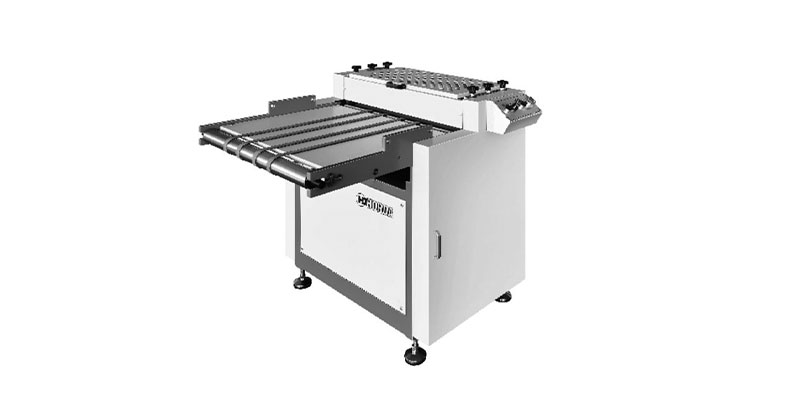
If the case will pass through an inner lining machine or another assembly stage, test that operation too. Its thickness and size limits must also suit the finished wrapped case.