
Round-Corner vs. Straight-Corner Hardcover Case Making
Round hardcover corners require a smooth wrap around a radius, while square corners require a flat tuck where two edges meet at 90 degrees.
How Are Square Corners Made on Hardcover Cases?
The cover material is usually trimmed diagonally at each corner, leaving enough material to cover the board tip. The case maker folds the material over the board edges and tucks it where the two folds meet. Trimming too close can expose the board tip; leaving too much material can create a thick overlap.
How Are Rounded Corners Made on Hardcover Cases?
The cover material must follow the curve and lie flat where it folds onto the inside of the case. A tighter radius or stiffer cover material can make it harder to achieve a smooth finish. There are two common equipment configurations:
- On the case maker: A machine equipped for round corners forms them during case making with dedicated corner tooling.
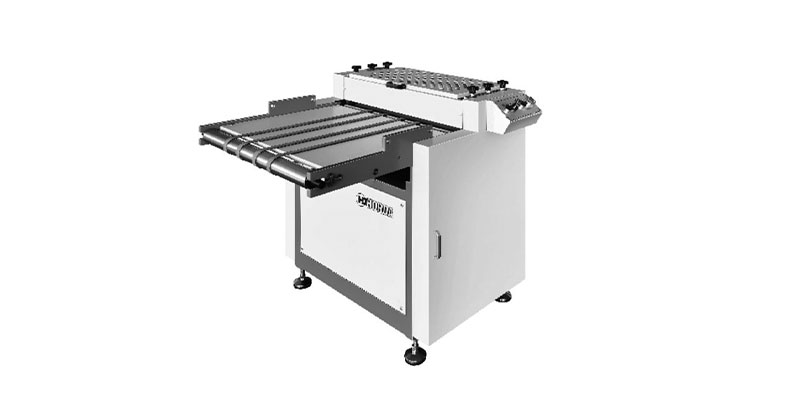
- At a separate rounding station: The case is made first and then fed into a corner rounder. The station may be connected to the line or fed separately. Board preparation and the use of heat depend on the equipment and materials.
Can One Case Making Machine Produce Both Corner Styles?
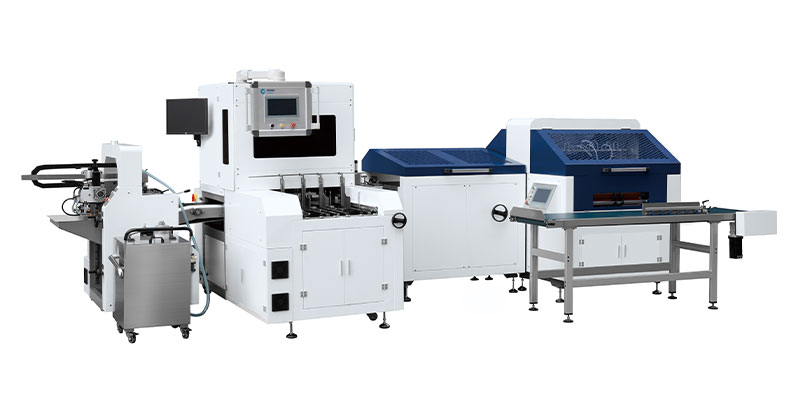
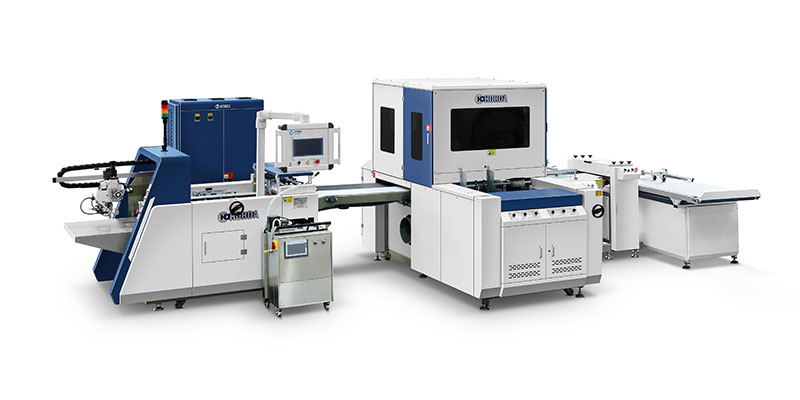
Yes, some case makers can produce both styles when equipped for them. When comparing HORDA rigid box and case making machines, check the specific model for supported corner radii, open case dimensions and board thicknesses. Confirm whether switching styles requires a settings change, guide adjustment, tooling swap or an optional round corner unit.
Check the full outline: Rounding the corners of a rectangular case is different from wrapping a case with a curved side or an S-shaped profile. Those shapes may require a different folding setup.
When Should You Choose Round or Square Hardcover Corners?
Round corners suit planners, pocket notebooks and children’s hardcovers when the design calls for a softer profile. Square corners suit textbooks, reference books and art books when a defined rectangular outline is preferred. For products that will be handled frequently, compare finished samples: board strength, cover material and adhesive bonding all affect how the corners hold up.
How Do You Check Corner Quality on a Hardcover Case?
- Round corners: Check the radius against the drawing. The curve should be even, the board fully covered and the folded material free of raised pleats.
- Square corners: Check that the corner is square, the board tip is covered and the tuck lies flat without a gap or bulky overlap.
Inspect all four corners on the first case after each changeover, then check for lifting once the adhesive has set. If the same corner repeatedly shows a defect, check board placement and cover trim at that position before changing the overall folding settings.