
Can an Automatic Rigid Box Making Machine Produce Irregular Shapes?
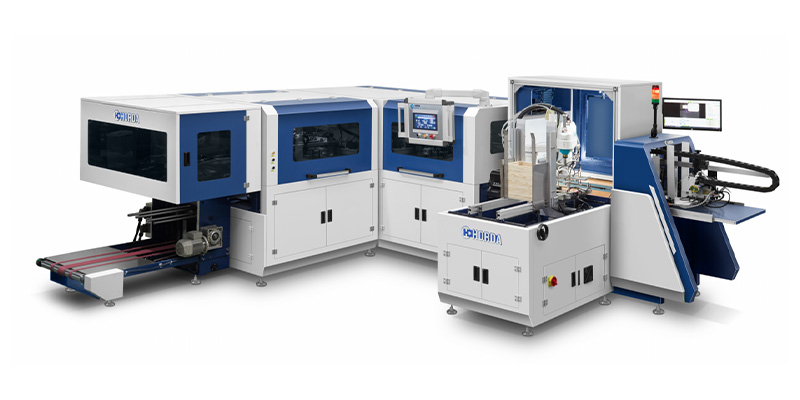
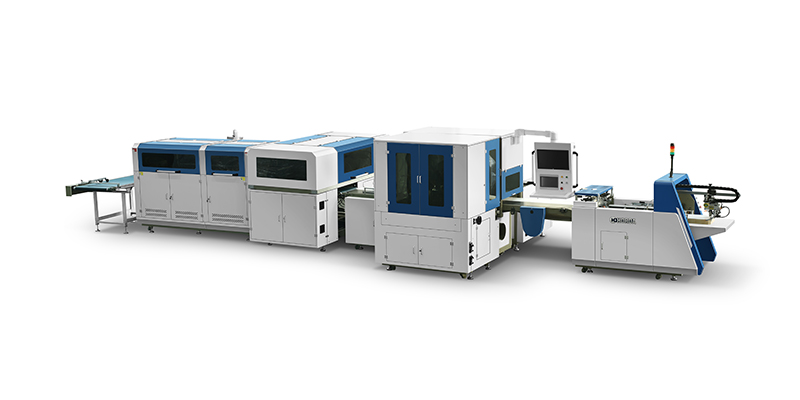
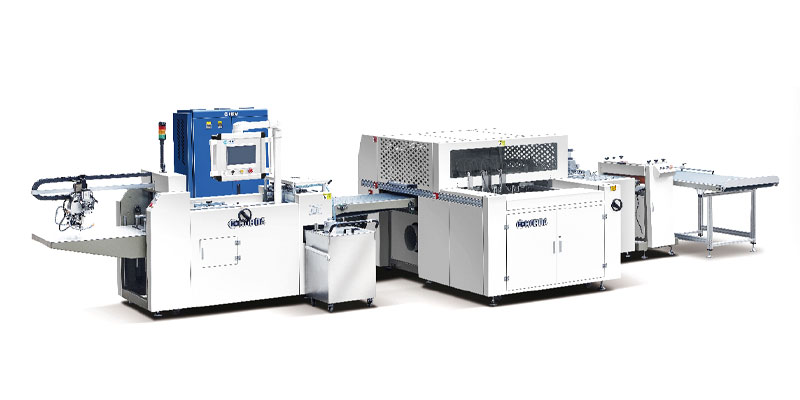
Yes, some automatic rigid box machines can process irregular-shaped cases, including certain triangular, curved and S-shaped designs. Compatibility depends on the machine configuration and product geometry.
For case-making equipment, this usually means wrapping prepared greyboard components to produce an outer cover or rigid case. Forming a matching tray and assembling the complete box may require separate equipment.
What Is an Irregular-Shaped Rigid Box?
An irregular-shaped rigid box has an outline or panel arrangement that differs from a conventional rectangular design. It may contain angled edges, curved sections, inward recesses or a shaped closure flap.
Identify which component requires machine processing. A shaped outer cover, a three-dimensional tray and an assembled package are different outputs.
- Outer case: Wrapped greyboard panels that form the cover.
- Tray or base: The structure that holds the product.
- Final assembly: Joining the case, tray, closure and inserts.
A machine capable of making an irregular outer case does not automatically produce every other component of the finished box.
Which Irregular Box Shapes Can a Machine Process?
Some configurations support triangular, curved and S-shaped cases, but the shape name alone does not establish compatibility. Dimensions, angles, curve radii and panel layout determine the actual processing requirements.
Triangular and Angled Cases
Angled edges require suitable positioning, folding access and corner preparation. Acute points need particular attention to paper coverage.
Curved Outlines
Compatibility depends on curve direction, radius, board thickness and the covering material’s ability to fold around the edge.
S-Shaped and Recessed Profiles
Changes between outward and inward curves can restrict handling and folding access. The complete contour needs review.
HORDA lists these shape capabilities within its rigid box making machine range. Confirm the applicable model and configuration using the product drawing rather than assuming every machine supports every listed shape.
How Does Mold-Free Processing Work?
Mold-free processing means the specified operation can be completed without a dedicated shape-specific mold. The machine uses its supported handling, positioning and folding mechanisms to process the prepared components.
The greyboard and covering material must still be prepared to the required outline. Board cutting, paper cutting and any necessary corner or relief cuts remain part of process preparation.
Mold-free capability also does not mean adjustment-free production. A new shape may require changes to:
- Material loading and feeding orientation.
- Positioning references and panel layout.
- Paper allowances and corner preparation.
- Folding clearances, travel and timing.
- Workpiece support or approved accessories.
Ask which operation is mold-free and whether any tooling, accessories or offline finishing are needed for the proposed design.
Why Do Curved Shapes Require Different Folding Methods?
A curved edge changes how the paper margin must bend and distribute around the board. A straight-edge folding action may not accommodate that contour without wrinkles, gaps or excessive overlap.
Along an outward curve, the turned-in paper can crowd together on the reverse side. Around an inward curve, the margin must accommodate a different path and may have limited room to move.
Depending on the design, suitable preparation and equipment may use segmented margins, relief cuts or a different folding action. These methods require testing because cuts that improve folding can also reduce edge coverage.
- Tight curves: Can be more demanding than broad, gradual curves.
- Thicker board: Changes the distance the paper travels around the edge.
- Stiff covering material: May resist bending or show cracks and wrinkles.
- Recessed areas: May limit access for folding and pressing components.
Increasing pressure cannot make an incompatible contour suitable for a particular folding mechanism.
Can One Machine Process Both Regular and Irregular Cases?
Yes, a suitably configured machine may handle both, provided each design fits its working range and processing capabilities. Changeover requirements depend on the differences between jobs.
A rectangular cover and a shaped cover may share feeding, gluing and positioning functions while requiring different folding adjustments or material preparation.
Compare the actual changeover process:
- Which settings can be recalled electronically?
- Which guides or mechanical components need adjustment?
- Are additional accessories required?
- Does either design need an offline finishing step?
- How many trial pieces are needed to achieve acceptable production?
Being able to run both shapes does not mean they will achieve the same output rate.
What Can Limit Irregular-Shape Production?
Processing can be limited by material handling, positioning references, folding access and the geometry of the paper turn-in. Overall case length and width are only part of the assessment.
- Small or narrow sections: May be difficult to grip, feed or support.
- Acute corners: Can leave little room for clean paper overlap.
- Deep recesses: May be inaccessible to the folding mechanism.
- Unstable feeding orientation: Can make consistent delivery difficult.
- Unsuitable reference features: Can complicate repeatable positioning.
- Material variation: Can affect bonding, contour coverage and surface finish.
Example: Two covers may have the same overall dimensions, but one has a broad curved edge and the other a deep inward notch. Their folding requirements can differ substantially.
How Can Manufacturers Verify Shape Compatibility Before Production?
Review a dimensioned drawing, confirm the proposed machine configuration and run actual materials through the required operations. A general shape description or photograph is not enough for final approval.
- Provide the geometry. Include the flat outline, individual panels, joint gaps, angles, curve radii and narrow sections.
- Specify the materials. Identify board thickness, covering material, surface finish and adhesive requirements.
- Define the required output. State whether the machine must deliver a wrapped case, lined case or another component.
- Confirm process coverage. Identify automatic operations, manual handling, accessories and offline steps.
- Run a continuous trial. Record misfeeds, positioning variation, wrapping defects and operator intervention.
- Inspect the finished samples. Check contour coverage, corners, bonding, surface condition and opening performance after adhesive setting.
Establish the production rate from the trial rather than applying a standard rectangular-case speed to the irregular design. Retain approved samples, preparation drawings and job settings for repeat production.