
How to Make Book-Style Rigid Boxes With an Automatic Case Making Machine How to Produce Magnetic Rigid Boxes With Automated Case-Making Equipment
Use automated case-making equipment to wrap and fold the outer case, then complete magnet installation, lining, tray fitting and assembly as the design requires.
What Is a Magnetic Rigid Box?
A magnetic rigid box uses a magnetic closure to hold its lid shut. A common design has a book-style outer case, a closure flap and an inner tray. Other structures are possible, so the board layout and assembly sequence must follow the product drawing.
The magnetic closure is part of the box design. It is not created by the case maker’s edge-folding operation.
Which Magnetic Box Parts Can a Case-Making Machine Produce?
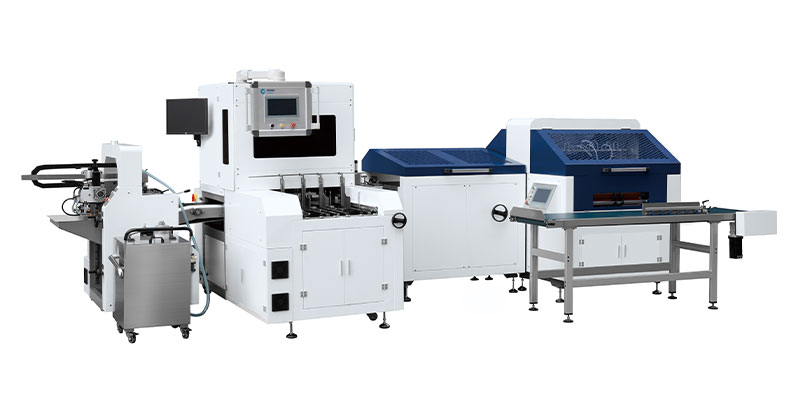
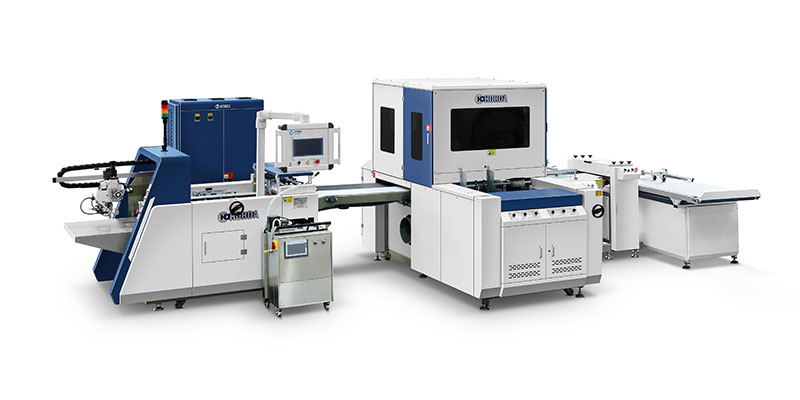
An automatic case maker can process compatible wrapped case components, such as cover panels, spine panels and closure flaps. It feeds and glues the cover paper, positions the grayboard and folds the paper over the board edges.
When selecting automated rigid box making equipment, check the open case dimensions, panel count, board thickness and narrowest panel. Confirm the required flap and spine dimensions against the specific model.
How Are the Lid and Base of a Magnetic Box Made?
For a book-style magnetic box, the case maker arranges the cover, spine, back and any supported flap panels on the outer paper. The spaces between panels allow the wrapped case to bend and close.
The inner tray or box base is prepared through a separate forming and wrapping process unless the supplied line explicitly includes it. The tray is then attached to the case at the specified position. Its depth and placement must match the cover and closure geometry.
Does Magnet Installation Require a Separate Process?
Magnet installation requires its own operation unless it is explicitly included in the equipment configuration. Depending on the design, this may involve preparing recesses, securing magnets and covering them with paper before later assembly.
- Position: The closure components must meet when the lid closes.
- Polarity: Paired magnets must attract in the assembled orientation.
- Retention: Magnets must remain secure within the intended structure.
- Surface finish: Concealed components should not create unwanted bulges or visible marks.
Confirm the installation sequence before production. If magnets need to be concealed beneath the covering or lining paper, install them at the appropriate stage before that surface is closed.
How Does Board Positioning Affect Lid Alignment?
Accurate panel placement helps the lid, spine and flap fold into their intended positions. Incorrect board spacing can leave the cover under tension or prevent the closure surfaces from meeting evenly.
Final alignment also depends on tray placement and magnet location. Inspect an assembled sample: a correctly wrapped flat case alone does not establish that the finished magnetic box will close properly.
How Do You Plan a Magnetic Rigid Box Production Workflow?
Start with the finished box drawing and identify which operations each machine performs. Place magnet preparation and installation at the stage required by the design, then plan the remaining work:
- Prepare materials: Cut boards and covering paper, and prepare any required magnet recesses.
- Make the outer case: Glue the paper, position the panels and complete edge wrapping.
- Finish the inside: Apply lining where specified, after any components that must sit beneath it are installed.
- Assemble the box: Attach the prepared tray, complete the closure structure and fit any product inserts.
- Inspect the result: Check lid alignment, magnetic engagement, bonding and surface appearance.
Test the complete sequence with your actual materials before approving a production run. Record which steps are automatic, which need operator handling and how components move between stations. This provides a practical basis for planning output and staffing.